

Imagine hiring a security inspector to check your office building, and they hand you a report showing thousands of unlocked doors and windows you never even knew were there.
That's essentially what just happened to the tech world.

Blog
Imagine hiring a security inspector to check your office building, and they hand you a report showing thousands of unlocked doors and windows you never even knew were there.
That's essentially what just happened to the tech world.

For years, the gold standard for avoiding a scam was simple: if an email looked suspicious, you just picked up the phone to verify it. Unfortunately, that safety net is fraying. Cybercriminals are now leveraging AI voice cloning to turn a quick phone call into a sophisticated trap.

We’ve all seen the headlines about what AI can do; it can write your emails, analyze your spreadsheets, and even generate art in seconds. But we rarely talk about what it takes to make that happen. When you ask a chatbot a question, you aren't just tapping into a "brain" in the cloud; you are triggering a massive, physical chain reaction of resource consumption.

Nowadays, it’s common for business tools to incorporate AI into their already helpful features. Google Docs is a prime example. As of the time of this writing, Google has recently added a “Help me create” function that can help you get a start on your next project.
Let’s take a look at how it works and how you could potentially utilize it to your advantage.
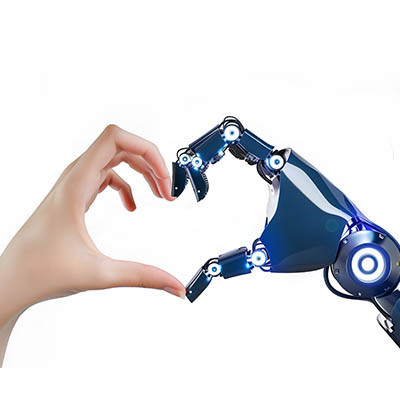
We all know that person who is just a little too comfortable with artificial intelligence. The one that is always talking about—and to—the LLM they use. The one that is always mentioning the prompts they created.
The danger isn't just that the AI is smart; it’s that the AI is extremely sycophantic. It is programmed to agree and to validate. When a chatbot stops challenging you and starts reinforcing your every whim, you aren't gaining an assistant, you’re losing touch with reality.

Wikipedia has always been the gold standard for human-vetted information. A recent clash between the Open Knowledge Association (OKA) and veteran Wikipedia editors has highlighted a big issue: AI hallucinations.
What started as an ambitious project to translate and expand the world’s most famous encyclopedia has turned into a cautionary tale about the erosion of AI trust.

After a decade of being told every new gadget is a revolution—only to see many of them end up as expensive line items with zero ROI—your skepticism is your best asset. The goal isn't to chase every shiny object; it’s to build a resilient, high-margin operation that uses technology as an organizational benefit. Understanding how to navigate this landscape without draining your capital is the difference between scaling up and being left behind.

Toys are an essential part of our development as people, whether you’re talking about baby toys that teach color recognition and empathy, collaborative toys that teach sharing and teamwork, or creative toys that encourage imagination and outside-the-box thinking. Just imagine what the toys of the future will be able to accomplish… assuming, of course, that the security issues we’re currently wrestling with are dealt with appropriately.
Unfortunately, this hurdle still needs work to be cleared.
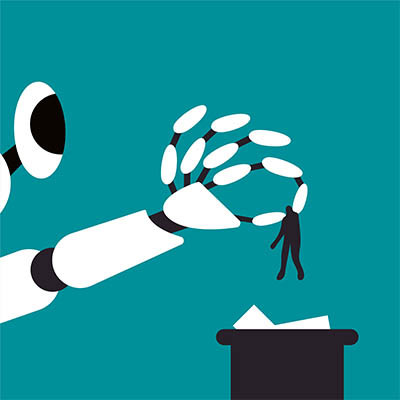
Quantifying the impact of AI on employment is notoriously difficult because technology rarely replaces a job in its entirety. Instead, it tends to disassemble a role into its component tasks. While AI is exceptionally efficient at handling repetitive, data-heavy, or predictable processes, it struggles with the high-level reasoning and interpersonal nuances that define many professions.
With the rise of generative AI infiltrating pretty much every sector of society, it’s no wonder that businesses are finding creative new ways to use it for their gain. However, you need to be especially careful when using generative AI in the workplace. Today, we want to cover three common no-no’s that your business should keep in mind as it navigates the wild landscape that is AI.

The horror genre has always been a means of shining a light on society's fears and concerns, often using metaphor to convey its message. In the spirit of the holiday, let’s consider some of the films over the years that have used artificial intelligence to teach us lessons through the ever-so-effective format of fear.

A significant and growing number of small businesses are either actively using AI tools or exploring their potential, motivated by the promise of increased efficiency, cost savings, and gaining a competitive edge.
It's an exciting movement, proving that AI isn't just for huge mega corporations. Small businesses are using AI for everything from generating marketing content and handling customer service inquiries with chatbots to analyzing customer data and automating back-office tasks. The goal is to compete faster and smarter.

Is your business data hard to get to, like it's locked away and only a few people have the key? That can really hold your business back. Imagine if everyone on your team could easily use all the data you create and collect to make better decisions, faster. That's what data democratization is all about, and it’s a powerful tool. In today’s blog we briefly discuss how it works.
Customer Login
Contact Us
Learn more about what Itek Systems, Inc. can do for your business.
Itek Systems, Inc.
33801 Curtis Blvd. STE 100
Eastlake, Ohio 44095
Free Consultation
Interested in seeing what we can do for your business? Contact us to see how we can help you!